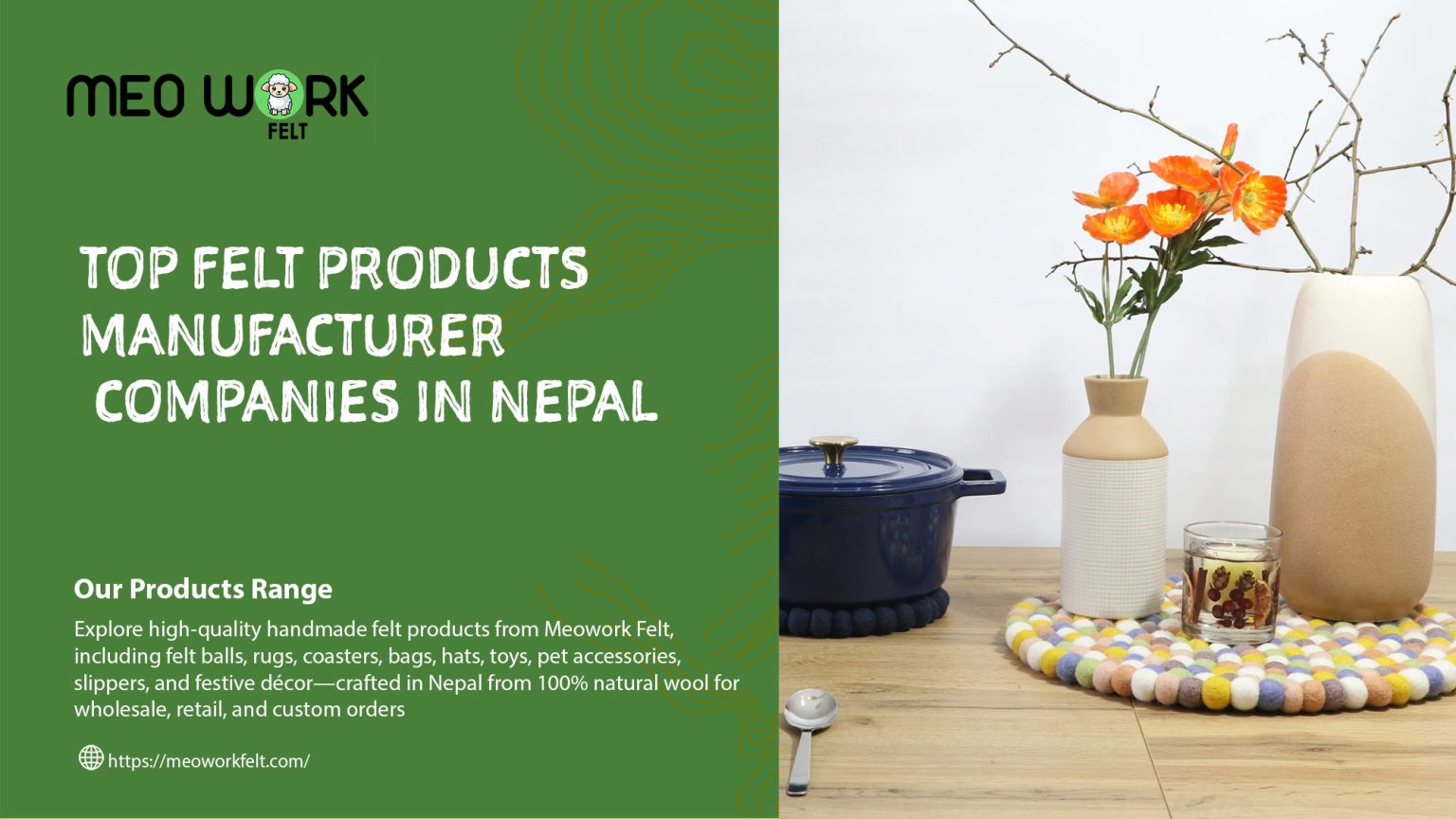
Felt products have surged in popularity across global markets, driven by increasing consumer demand for sustainable, handmade items that combine functionality with artistic craftsmanship. From decorative home accessories to children’s toys and fashion statements, felt products offer versatility that appeals to environmentally conscious consumers and businesses seeking unique offerings.
Nepal has emerged as a premier destination for sourcing high-quality felt products, leveraging centuries-old traditions combined with modern manufacturing capabilities. The country’s felt industry contributes approximately 3% of Nepal’s total exports, establishing it as a significant player in the global marketplace. With the felt products market projected to grow at a CAGR of 4.5% from 2023 to 2028, understanding which manufacturers deliver exceptional quality becomes crucial for businesses and retailers.
This comprehensive guide explores Nepal’s top felt products manufacturer companies, examining their strengths, specializations, and unique value propositions. We’ll analyze key factors that distinguish leading manufacturers and provide insights into successful collaborations that have shaped the industry landscape.
Why Nepal Dominates Felt Production
Nepal’s dominance in felt manufacturing stems from several interconnected advantages that create an ideal ecosystem for producing exceptional felt products. The country’s mountainous terrain provides access to high-quality wool from local sheep and yaks, forming the foundation for superior felt products.
Generations of artisans have perfected traditional felt-making techniques, passing down knowledge that ensures authentic craftsmanship. This expertise, combined with modern manufacturing capabilities, enables Nepali companies to produce both traditional designs and contemporary innovations that meet international standards.
The cost advantage Nepal offers remains significant without compromising quality. Lower operational costs, combined with skilled labor, allow manufacturers to provide competitive pricing while maintaining fair working conditions for artisans.
Key Factors for Choosing a Felt Products Manufacturer
Selecting the right felt products manufacturer requires careful evaluation of multiple criteria that directly impact product quality, business relationships, and long-term success.
Quality Control Standards represent the most critical factor. Leading manufacturers implement stringent quality control measures at every production stage, from raw material selection to final packaging. This ensures consistency and durability across all products.
Customization Capabilities determine how well a manufacturer can meet specific client requirements. The best companies offer design flexibility, allowing businesses to create unique products that differentiate their offerings in competitive markets.
Ethical and Sustainable Practices have become non-negotiable for many businesses and consumers. Manufacturers committed to fair trade principles, environmental sustainability, and community development provide added value that resonates with conscious consumers.
Export Experience and Logistics capabilities ensure reliable delivery and smooth international transactions. Companies with proven track records in global markets understand regulatory requirements and can navigate complex shipping processes efficiently.
Successful Collaborations and Case Studies
European Retail Chain Partnership
A leading European retail chain approached Meowork Felt to develop an eco-friendly felt toys line for children. The objective required meeting stringent safety standards while maintaining competitive pricing.
Meowork Felt designed and produced a comprehensive range of felt toys using 100% natural wool and non-toxic dyes. The manufacturing process incorporated rigorous testing protocols to ensure compliance with European safety regulations.
The collaboration resulted in commercial success, enhancing the retailer’s brand image as an environmentally responsible company. The felt toys line became a bestseller, driving customer loyalty and generating repeat orders.
Interior Design Firm Collaboration
An architectural firm required custom felt wall panels for a corporate office space, focusing on acoustic improvement and aesthetic appeal. The challenge involved creating sound-absorbing panels with intricate designs that complemented the office’s modern aesthetic.
Meowork Felt crafted unique felt panels incorporating advanced acoustic engineering principles. The panels featured custom patterns that enhanced visual appeal while providing superior sound absorption properties.
The project received exceptional feedback from both the client and office employees. The successful implementation showcased Meowork Felt’s capability to deliver specialized solutions for commercial applications.
Sustainable Fashion Brand Partnership
A prominent fashion brand sought to incorporate felt accessories into their sustainable collection, requiring materials that aligned with their environmental values and design standards.
Meowork Felt supplied high-quality felt accessories, including bags and decorative elements, manufactured from ethically sourced materials. The production process emphasized transparency and traceability throughout the supply chain.
The collaboration elevated the fashion brand’s sustainability credentials, resonating strongly with environmentally conscious consumers. The partnership has continued with expanded product lines and increased order volumes.
Trends and Innovations Shaping the Felt Industry
The felt products industry continues evolving rapidly, driven by changing consumer preferences, technological advancement, and environmental consciousness. Understanding these trends helps businesses make informed sourcing decisions.
Eco-Friendly and Sustainable Materials represent the most significant trend affecting felt manufacturing. Consumers increasingly demand products made from organic and recycled materials, pushing manufacturers to adopt sustainable production methods.
Customization and Personalization have become crucial differentiators in competitive markets. Modern consumers seek bespoke felt items tailored to individual preferences, creating opportunities for manufacturers offering design flexibility.
Technological Integration is transforming traditional felt production processes. Advanced machinery improves efficiency and precision while maintaining handcrafted quality, allowing manufacturers to scale production without compromising artisanal values.
Multifunctional Applications expand felt products beyond traditional uses. Industries such as automotive, construction, and healthcare increasingly utilize felt materials for specialized applications, creating new market opportunities.
Digital Marketing and E-Commerce platforms enable manufacturers to reach global markets directly. Companies leveraging online presence effectively can bypass traditional distribution channels and build stronger customer relationships.
Sustainable Practices in Felt Manufacturing
Sustainability has become a defining characteristic of successful felt products manufacturer companies in Nepal. Leading companies implement comprehensive environmental and social responsibility programs that benefit communities while protecting natural resources.
Raw Material Sourcing emphasizes ethical procurement from local farmers and cooperatives. This approach ensures quality while supporting rural communities and maintaining traditional livestock practices.
Production Processes incorporate water conservation, waste reduction, and energy efficiency measures. Advanced manufacturers utilize renewable energy sources and implement circular economy principles to minimize environmental impact.
Worker Welfare Programs ensure fair wages, safe working conditions, and professional development opportunities. Companies prioritizing employee satisfaction achieve higher productivity and quality standards.
Community Development Initiatives support local infrastructure, education, and healthcare projects. These programs create positive social impact while building strong community relationships.
Tips for Sourcing Felt Products from Nepal
Successfully sourcing felt products from Nepal requires understanding local business practices, cultural considerations, and logistics requirements.
Research and Verification should precede any business relationship. Verify manufacturer certifications, quality standards, and client references to ensure reliability and capability.
Communication Standards must accommodate time zone differences and cultural communication styles. Establish clear channels and response time expectations to maintain project momentum.
Quality Specifications should be detailed and documented comprehensively. Provide samples, technical drawings, and performance requirements to ensure accurate production outcomes.
Logistics Planning requires understanding shipping times, customs procedures, and potential delays. Work with experienced manufacturers who can navigate international shipping complexities efficiently.
Long-term Relationship Building focuses on mutual benefit and continuous improvement. Successful partnerships develop over time through consistent communication and shared goals.
Future Outlook for Nepal’s Felt Industry
Nepal’s felt products manufacturing industry is positioned for continued growth, driven by increasing global demand for sustainable, handmade products. The combination of traditional craftsmanship and modern manufacturing capabilities creates unique competitive advantages.
Market Expansion opportunities exist in emerging economies and specialized applications. As awareness of felt product benefits grows, new markets continue opening for innovative manufacturers.
Technology Integration will enhance production efficiency while maintaining artisanal quality. Companies investing in appropriate technology solutions will gain competitive advantages in cost and quality.
Sustainability Leadership positions Nepali manufacturers favorably as global environmental consciousness increases. Companies demonstrating genuine commitment to sustainable practices will capture growing market segments.
Skills Development programs ensure continued availability of skilled artisans. Investment in training and education maintains Nepal’s competitive advantage in felt manufacturing.
Frequently Asked Questions
What makes Nepali felt products superior to alternatives from other countries?
Nepali felt products combine centuries-old traditional techniques with high-quality local wool, creating products with exceptional durability and authentic craftsmanship. The country’s mountainous climate produces wool with unique characteristics that enhance felt quality.
How can businesses ensure consistent quality when sourcing from Nepal?
Partner with established manufacturers who implement comprehensive quality control systems. Request samples, certifications, and client references. Companies like Meowork Felt provide detailed quality assurance documentation and testing protocols.
What are the typical lead times for felt product orders from Nepal?
Lead times vary based on product complexity and order size. Standard products typically require 2-4 weeks, while customized items may need 6-8 weeks. Experienced manufacturers provide accurate timelines during project planning phases.
How do Nepali felt manufacturers handle international shipping and customs?
Established manufacturers work with experienced freight forwarders and understand international shipping requirements. They provide necessary documentation and can assist with customs procedures to ensure smooth delivery.
Partner with Nepal’s Leading Felt Manufacturer
Nepal’s felt products manufacturing industry offers exceptional opportunities for businesses seeking high-quality, sustainable, and competitively priced felt products. The combination of traditional craftsmanship, modern manufacturing capabilities, and ethical business practices creates unique value propositions.
Meowork Felt stands out among Nepal’s felt products manufacturer companies through its commitment to innovation, sustainability, and customer satisfaction. Their comprehensive approach to customization, quality control, and international service makes them the preferred partner for businesses worldwide.
The future of felt products manufacturing in Nepal looks bright, with continued growth expected across multiple market segments. Companies that establish strong partnerships with leading manufacturers today will benefit from Nepal’s expanding capabilities and growing reputation for excellence.
Ready to discover how Nepal’s premier felt products manufacturer can enhance your business offerings? Contact Meowork Felt today to explore their comprehensive product range and discuss your specific requirements with their expert team.